Crepe myrtle
Botanical name: Lagerstroemia spp.
Common name: Crepe myrtle
Family: Lythraceae
Type: Deciduous tree or shrub
Origin: Asia, native to China, Korea, Japan, and India
Characteristics
Habit: Small tree or large shrub with smooth, sinuous trunk and elegant branching. Naturally upright or vase-shaped, developing graceful taper and finer ramification with age.
Leaves: Opposite or whorled, simple, elliptic leaves. Medium-sized but reduces well under bonsai culture. Deciduous, turning vivid orange, red, and yellow in autumn.
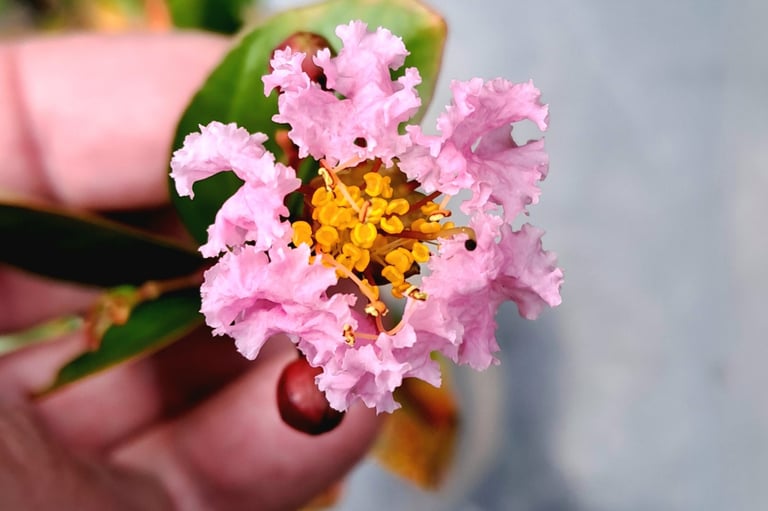
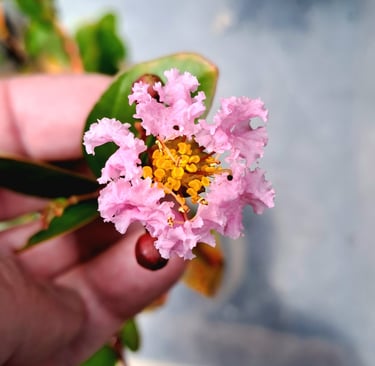
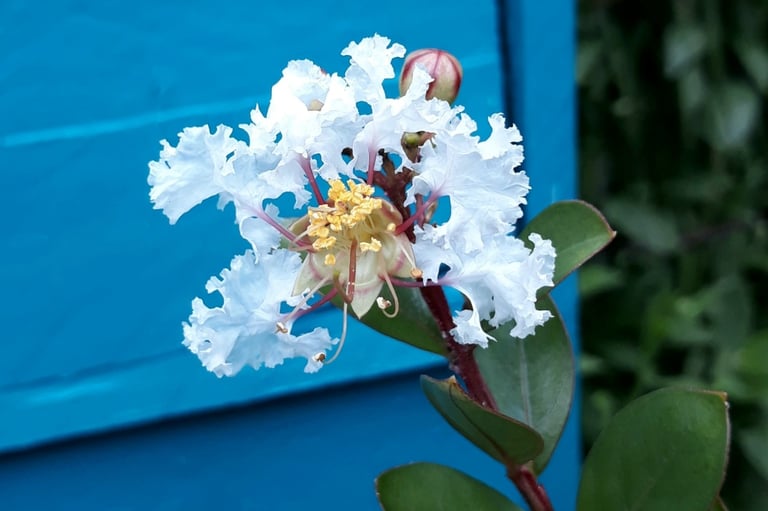
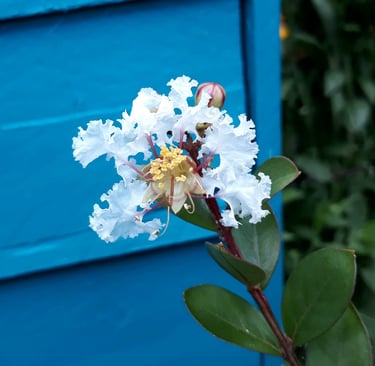
Flowers: Profuse, crinkled blossoms in large clusters during late summer (white, pink, purple, or red depending on cultivar). Long-lasting and unusual, appearing on new growth.
Bark: One of its best features, smooth, exfoliating bark revealing mottled patches of cream, gray, and cinnamon brown.
Fruit: Small, round seed capsules that persist into winter.
Growth rate: Moderate; vigorous when young, allowing steady trunk and branch development.
Cultivation
Light: Full sun essential for flowering, strong growth, and bark color. Partial shade is tolerated but reduces bloom and vigor.
Temperature: Prefers warm-temperate to subtropical climates. Hardy forms (L. fauriei, L. indica × fauriei hybrids) tolerate frost; tropical species (L. speciosa) require winter protection.
Soil: Well-draining but retentive substrates. Avoid waterlogged soil.
Watering: Moderate to high water needs in summer; keep evenly moist but not soggy. Reduce watering slightly in autumn as growth slows.
Fertiliser: Feed regularly from spring to late summer with balanced fertilizer. Stop heavy feeding in early autumn to encourage dormancy and flower bud hardening.
Pruning: Structural pruning in late winter before bud swell. Maintenance pruning and pinching throughout the growing season to control shoot length and promote ramification. Lagerstroemia flowers on new wood, so pruning before bud break encourages fresh flowering shoots.
Repotting: Most sources recommend every 2–3 years in early spring, just as buds begin to swell. My experience is that they produce fine roots profusely and I have tended to trim their roots annually.
Pests & diseases: May experience aphids, powdery mildew, or sooty mold in humid conditions; good airflow generally prevents these issues.
Propagation
Cuttings: Semi-hardwood or hardwood cuttings root easily in late spring to summer.
Layering: Air-layering works well for thick-trunked material.
Seed: Viable but slower to mature for bonsai purposes.
Grafting: Sometimes used for specific flower colors or dwarf cultivars.
Bonsai notes:
Well-draining but retentive mix such as akadama : pumice : fine bark = 2 : 1 : 1 or similar. pH neutral to slightly acidic preferred. Mine produce an abundance of fine roots and as bonsai you might need to root prune annually in early spring.
Wire in autumn or late spring when shoots have lignified; the bark is delicate, so protect it with raffia or paper and remove before it bites in.
Most sources state that they flower on the current year's growth and you shouldn't trim shoots after early spring. I've noticed that they grow new shoots in spring and then they have a pronounced pause before starting the new growth that will produce flowers. I suspect that it might be possible to trim back when new shoots enter this paused state and maybe still get flowers to develop when growth restarts mid-late summer.
Left to themselves, Lagerstroemia have a tendency toward multi-trunks, although they are equally easy to grow as a single trunk. I would suggest a style that allows you to make a feature of the beautiful bark which is particularly striking during the winter.
Hardy hybrids can overwinter outdoors in mild climates; in colder areas, provide frost protection for roots and branches. All of mine have been grown directly in the garden, although I do provide some cold frame protection for those that have been moved to pots.
Crepe Myrtle Species
Lagerstroemia fauriei (Japanese Crape Myrtle)
Japan. Tall, elegant form with attractive peeling bark (tan and cinnamon shades). One of the hardiest species (-5c) which has been bred with L. indica to create a range of small-leaved forms better adapted to temperate climates
Lagerstroemia indica (Common Crape Myrtle)
China, Korea and Japan. Smooth, flaking bark; small leaves; abundant summer flowers in pink, white, red, or lavender. Responds very well to pruning and wiring; leaf reduction easy with regular trimming.
Lagerstroemia limii (Formosan Crape Myrtle)
Taiwan. Small leaves, delicate pink flowers, compact growth. Similar to L. subcostata, excellent for small bonsai. Grows well in warm-temperate climates.
Lagerstroemia speciosa (Queen’s Crape Myrtle / Pride of India)
India, Southeast Asia. Large tropical tree with huge pink-purple flowers and leathery leaves. Best for larger bonsai; dramatic trunk and flower display. Tender and therefore ideal for tropical bonsai collections.
Lagerstroemia subcostata (Taiwan Crape Myrtle)
Taiwan and Southeast China. Small leaves, fine branches, pale lavender-pink flowers. Naturally small foliage and compact growth habit — ideal for shohin bonsai.
Lagerstroemia cultivars (generally indica × fauriei Hybrids)
Modern horticultural hybrids that frequently have better cold and frost tolerance, smaller leaves, mildew resistance, wide flower colors, and compact growth.
Zuni: compact, lavender flowers, small leaves.
Hopi: pink flowers, dwarf form.
Acoma: semi-weeping white flowers, small foliage.
Tonto: bright fuchsia blooms, compact growth.
Dynamite: dark red flowers, taller growth
Get in touch for collaborations and inquiries
© 2025. All rights reserved.